Nail Health Causes and Treatments for Brittle, Peeling, and Weak Nails

Brittle, peeling, and weak nails are common, and they usually come from a mix of everyday damage, moisture imbalance, aging, and sometimes an underlying health issue. Dermatology guidance from the American Academy of Dermatology and Mayo Clinic says nail care habits matter a lot, and persistent nail changes should be checked if they do not improve or come with pain, swelling, color changes, or nail lifting.
Why Nails Become Weak
Healthy nails are made mostly of keratin, and they are normally smooth, even, and firm. When nails start splitting, peeling, or breaking easily, it often means the nail plate is getting damaged faster than it can recover. Repeated water exposure, harsh chemicals, rough manicure practices, biting, picking, and trauma are among the most common causes.
Aging can also make nails more fragile over time. Mayo Clinic notes that some nail ridges and changes become more common with age, while broader thinning or texture changes can signal either wear-and-tear or a medical issue that deserves attention. Peeling nails can also happen after frequent use of nail products and removers, especially when nails are repeatedly dried out or mechanically stressed.


Common Causes
Several everyday habits can gradually weaken nails. Dermatologists specifically warn that too much water exposure can make nails split, peel, or break, especially when people wash dishes, clean, or handle harsh chemicals without gloves. Nail biting, cuticle picking, and using nails as tools can also create repeated microtrauma that leaves nails brittle and uneven.
Nail treatments themselves can be part of the problem. Aggressive filing, repeated gel removal, and acetone-based soaking can dry out the nail plate and lead to peeling or thinning over time. Harsh removers and frequent polish changes may also contribute, which is why Mayo Clinic recommends limiting remover use and choosing acetone-free options when possible.
Health Conditions To Consider
Sometimes brittle nails are not just a cosmetic issue. Mayo Clinic advises seeing a clinician if nails get thinner or thicker, stop growing normally, change color, separate from the skin, or become painful or swollen. These changes can point to skin disease, infection, circulation issues, or other systemic problems that need medical evaluation.
Nutritional gaps may also play a role in some people. Mayo Clinic notes that biotin has some evidence for helping weak or brittle nails, though it should be discussed with a healthcare professional first. Because brittle nails can have many causes, it is best not to assume that supplements alone will fix the problem.
Best Treatments
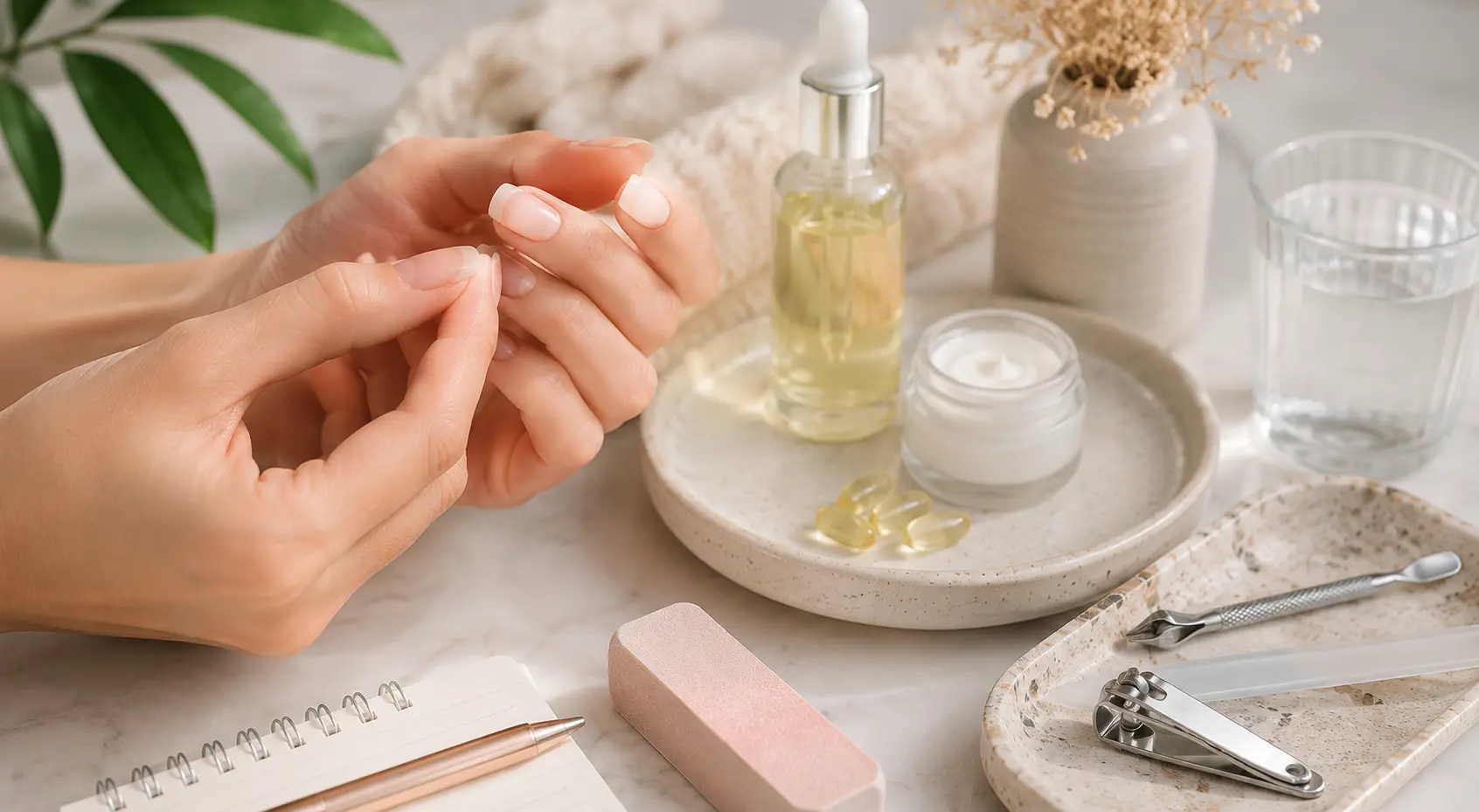
The most effective treatment usually starts with reducing damage and restoring moisture. The American Academy of Dermatology recommends keeping nails clean and dry, trimming them straight across, filing snags gently, and protecting nails from water with gloves during cleaning and dishwashing. Mayo Clinic also recommends regular moisturizer use, especially rubbing lotion into the nails and cuticles after handwashing.
Strengthening and hydrating products can help, too. Mayo Clinic says a nail hardener may help strengthen nails, while dermatology guidance commonly supports using moisturizers consistently to improve flexibility and reduce peeling. A gentle routine is usually more effective than trying to “repair” nails with aggressive buffing, strong chemicals, or frequent salon overprocessing.
Daily Nail Care Habits
Small changes make a big difference over time. Keep nails short enough to avoid snagging, use sharp clippers, and file in one direction rather than sawing back and forth. Avoid biting nails or tearing off hangnails, because that can damage the nail bed and raise infection risk.
Moisture control matters more than many people realize. Dermatology advice emphasizes wearing gloves when cleaning or washing dishes and applying lotion after handwashing because repeated wet-dry cycles can weaken nails. If you frequently use polish remover, choose gentler formulas and reduce how often you remove polish when possible.
Nutrition And Supplements
A balanced diet supports nail growth, but it is rarely an instant fix. Mayo Clinic notes that biotin may help some people with weak or brittle nails, although it is best used with medical guidance rather than as a blanket solution. If nail fragility is linked to a deficiency or another condition, nutrition alone will not fully solve it.
A practical approach is to focus first on the basics: adequate protein, overall nutrition, hydration, and avoiding habits that damage nails. If the nails improve only partially, or if there are other symptoms like fatigue, hair loss, or skin changes, a medical checkup can help identify whether something deeper is going on.
When To See A Doctor
Not every brittle nail needs medical care, but some signs should not be ignored. Mayo Clinic says to seek evaluation if you notice color changes, shape changes, thickening or thinning, pits or grooves, nail separation, bleeding, swelling, pain, or failure of nails to grow. The AAD also advises seeing a dermatologist if nail changes persist or are associated with pain, because they can indicate more serious nail problems.
A doctor can tell the difference between ordinary wear-and-tear and a condition that needs treatment. That is especially important if you have diabetes, poor circulation, frequent infections, or a history of skin disease. Early evaluation can prevent minor nail damage from becoming a long-term issue.
Conclusion
Brittle, peeling, and weak nails are usually manageable once the cause is identified. In many cases, the best treatment is a combination of gentler nail care, less water and chemical exposure, regular moisturizing, and avoiding damaging habits like biting or picking. If the problem keeps coming back or is paired with other nail changes, professional evaluation is the safest next step.