10 Common Nail Problems and What Your Nails Are Trying to Tell You

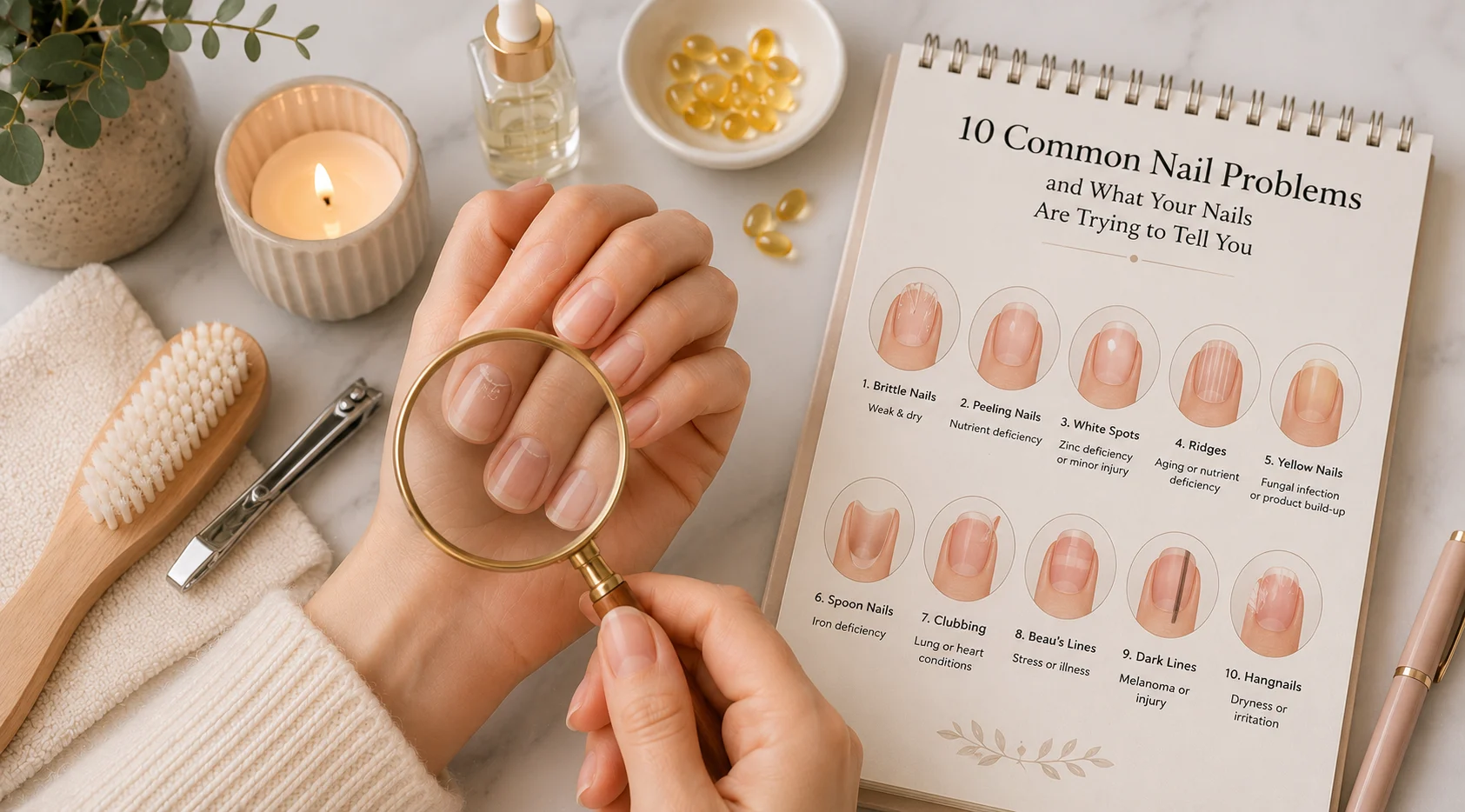
Your nails can reveal more about your health and daily habits than you might realize. While many nail changes are harmless and caused by things like dryness, aging, or frequent manicures, some nail problems may signal nutritional deficiencies, infections, or other underlying issues.
Healthy nails are usually smooth, strong, and consistent in color. When nails suddenly become brittle, discolored, ridged, or unusually shaped, your body may be trying to tell you something important.
The good news is that many common nail problems can improve with proper nail care and lifestyle changes. Understanding what causes these changes can help you protect both your nails and your overall health.


1. Brittle or Cracking Nails
Brittle nails are one of the most common nail complaints. Nails may split, peel, chip easily, or feel unusually weak.
Frequent exposure to water, cleaning products, acetone, and harsh chemicals often causes this problem. Overwashing hands and repeated gel manicures can also dry out the nail plate.
In some cases, brittle nails may be linked to aging, dehydration, iron deficiency, or low levels of certain vitamins.
Using cuticle oil regularly and wearing gloves while cleaning can help reduce breakage. If the problem continues despite proper care, it may be worth discussing with a healthcare professional.
2. Yellow Nails
Yellow nails are commonly caused by dark nail polish stains, smoking, or fungal infections.
People who frequently wear nail polish without using a protective base coat often notice yellow discoloration over time. Fungal infections can also cause nails to thicken, crumble, or develop an unpleasant odor along with the yellow color.
In rare situations, persistent yellow nails may be associated with respiratory conditions or other medical concerns.
Giving nails occasional breaks from polish and keeping nails clean and dry may help prevent discoloration.
3. White Spots on the Nails
Small white spots on the nails are usually harmless. Many people believe they are caused by calcium deficiency, but that is not typically true.
Most white spots are actually the result of minor trauma to the nail matrix. Bumping the nail or accidentally damaging it during a manicure can leave temporary white marks that grow out over time.
Occasionally, allergic reactions to nail products may also cause white patches.
If the spots are widespread, painful, or accompanied by other nail changes, a doctor should evaluate them.
4. Peeling Nails
Peeling nails occur when thin layers of the nail begin separating at the tips.
This often happens because of repeated wetting and drying cycles, excessive hand washing, or frequent use of nail polish remover. Weak nails may also peel after aggressively removing gel polish or acrylics.
Dehydrated nails are more likely to peel, which is why moisturizing is important.
Using gentle nail files, avoiding harsh chemicals, and applying nail oil daily can improve nail flexibility and reduce peeling.
5. Nail Ridges
Vertical ridges running from the cuticle to the tip are extremely common, especially with aging. These ridges are usually harmless.
Horizontal ridges, however, can sometimes indicate stress, illness, injury, or interruptions in nail growth. Deep horizontal grooves may appear after severe illness or major physical stress on the body.
In some cases, nutritional deficiencies can also affect nail texture.
If ridges suddenly appear along with other symptoms, it may be worth seeking medical advice.
6. Spoon-Shaped Nails
Spoon nails, also known as koilonychia, curve inward and may look scooped out in the center.
This condition is sometimes associated with iron deficiency anemia. In other cases, it may be linked to thyroid problems or certain medical conditions.
Because spoon nails can occasionally point to underlying health concerns, it is important not to ignore persistent changes in nail shape.
A medical evaluation and blood testing may help identify the cause.
7. Thickened Nails
Thick nails are often associated with fungal infections, especially when the nails become yellow, crumbly, or distorted.
Aging can also naturally thicken nails over time. Repeated trauma, such as pressure from tight shoes, may contribute as well.
Toenails are more commonly affected than fingernails.
Keeping nails trimmed, dry, and clean can help reduce fungal growth, but severe fungal infections may require professional treatment.
8. Dark Lines or Streaks
Dark vertical lines on the nails can have several causes. In some people, especially those with darker skin tones, harmless pigmentation may naturally appear in the nails.
However, new dark streaks that suddenly appear or change over time should not be ignored. In rare cases, they may signal a serious condition called subungual melanoma, a form of skin cancer that develops under the nail.
Any unusual dark line, especially one affecting only one nail, should be checked by a dermatologist.
9. Nail Separation from the Nail Bed
Sometimes the nail begins lifting away from the skin underneath, creating a white or yellow gap.
This condition, called onycholysis, may happen because of trauma, allergic reactions, psoriasis, fungal infections, or excessive exposure to water and chemicals.
Long nails are more likely to catch on objects and separate from the nail bed.
Keeping nails short and avoiding harsh nail products may help prevent further lifting.
10. Weak or Slow-Growing Nails
Slow nail growth is not always a sign of illness. Factors like age, genetics, and lifestyle can affect how quickly nails grow.
However, consistently weak nails may sometimes be linked to poor nutrition, dehydration, stress, or underlying health conditions.
Protein, iron, zinc, and biotin all play roles in nail health. Eating a balanced diet rich in nutrients can support stronger nail growth over time.
Sleep, hydration, and reducing excessive nail product use can also improve nail strength naturally.
When Nail Problems May Need Medical Attention
Many nail issues are temporary and improve with better nail care habits. However, some symptoms should not be ignored.
You should consider seeing a healthcare professional if you notice:
- Sudden nail discoloration
- Painful swelling around the nails
- Persistent thickening or crumbling
- Dark streaks that change over time
- Severe nail separation
- Nail changes combined with fatigue, dizziness, or other health symptoms
Nails can sometimes provide early clues about underlying medical conditions, so paying attention to unusual changes is important.
How to Keep Nails Healthy
Healthy nails start with consistent care.
Moisturizing your hands and cuticles daily can help prevent dryness and breakage. Wearing gloves while cleaning protects nails from harsh chemicals and excess moisture exposure.
Avoid biting or picking at your nails, and never peel off gel polish or acrylics forcefully. Giving your nails occasional breaks from polish may also help them recover and stay stronger.
A balanced diet, hydration, and gentle nail care routines often make a noticeable difference over time.
Final Thoughts
Your nails are more than just a beauty feature. They can reflect your habits, environment, and sometimes even your overall health.
Most common nail problems are harmless and improve with simple lifestyle adjustments and proper nail care. Still, persistent or unusual changes should never be ignored.
Learning to recognize what your nails are trying to tell you can help you maintain healthier nails and potentially catch larger health concerns earlier. Paying attention to small changes today may protect your nail health in the long run.