

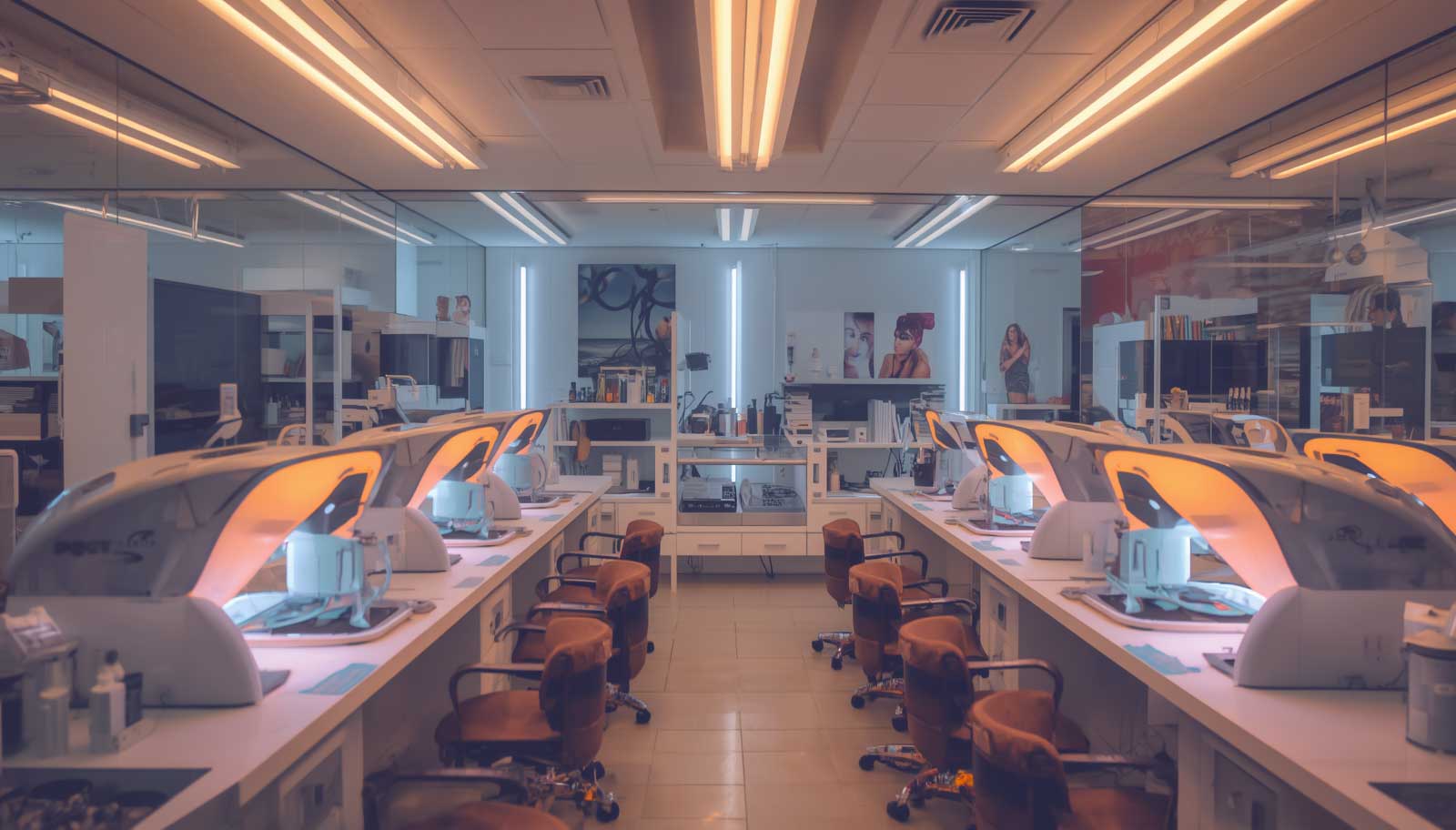
Gel manicures have changed the way we do our nails.
They last longer than traditional polish, resist everyday chipping, and give you that smooth, glossy finish that can stay fresh for weeks.
But there is one part of the process that often raises questions: the curing lamp.
You put your hands under a lamp for a few minutes, sometimes every two or three weeks, and the gel hardens almost instantly.
So, how much UV radiation are your hands actually getting?
And should you be worried about skin aging or skin cancer?
The honest answer is more nuanced than either "UV nail lamps are completely safe" or "gel manicures cause skin cancer."
Research has found that nail lamps emit primarily UVA radiation, and laboratory studies have demonstrated that exposure can cause cellular and DNA changes. However, there is currently no strong evidence showing that typical nail-lamp use causes skin cancer in people. A recent review of the available research concluded that evidence for a carcinogenic effect remains limited, with most mathematical risk estimates suggesting minimal or very low risk.
That doesn't mean there is zero risk.
It means the risk from normal use appears to be low, while the long-term effects of repeated exposure are still being studied.
What Kind of UV Light Do Gel Nail Lamps Emit?
Despite the name "UV lamp," these devices aren't simply miniature tanning beds.
Most nail-curing lamps primarily emit UVA light, which falls in the 315 to 400 nanometer range.
UVA penetrates deeper into the skin than UVB and is associated with photoaging and DNA damage through several biological pathways.
The lamps used for gel manicures are designed to cure photoreactive ingredients in gel products. Depending on the device, the exposure can last for several minutes during each manicure.
Research measuring commercial nail lamps has found predominantly UVA emissions, although the amount of radiation varies considerably between devices.
That's an important point.
Not every nail lamp delivers exactly the same exposure.
Are UV Nail Lamps the Same as LED Nail Lamps?
This is one of the most confusing parts of gel-manicure safety.
You'll often see salons advertise an "LED lamp" as though it contains no UV radiation.
That's not quite right.
LED refers to the technology producing the light, not automatically to the absence of ultraviolet radiation.
Many LED nail lamps emit wavelengths that include UVA because UV-sensitive gel products need that type of radiation to cure.
However, newer LED curing systems can cure certain products more quickly, potentially reducing the amount of time your hands are exposed.
The American Academy of Dermatology recommends choosing an LED curing light rather than a traditional UV curing light when possible because LED systems emit lower levels of UV radiation and cure gel more quickly.
So, "LED" doesn't mean "zero UV."
It generally means a different light source that can provide more efficient curing with potentially less UV exposure.
Can UV Nail Lamps Damage Your DNA?
This is where the research becomes particularly interesting.
A 2023 study published in Nature Communications exposed mammalian cells to radiation from a commercial UV nail polish dryer.
Researchers found increased reactive oxygen species, DNA damage, mitochondrial dysfunction, and mutations in the exposed cells.
That sounds alarming.
But there is an important distinction.
The study was performed on cells in laboratory conditions, not on people receiving normal salon manicures.
Laboratory evidence can show that a particular type of radiation has the biological potential to cause damage. It cannot, by itself, tell us exactly how much disease risk a person faces from occasional or routine exposure.
That's why this study is important, but it should not be interpreted as proof that gel manicures cause cancer.
Does UV Gel Lamp Exposure Cause Skin Cancer?
This is probably the biggest question.
At the moment, there isn't compelling evidence that normal UV nail-lamp use causes skin cancer.
A 2025 review examining the available literature found reports of squamous cell carcinoma in people with histories of UV nail-lamp use, but the researchers also found that the overall evidence was limited. Of seven mathematical risk models reviewed, six estimated minimal to no carcinogenic risk.
A 2024 systematic review reached a similar conclusion from a different angle.
It found that prolonged and repeated exposure may carry a low potential risk, but emphasized that the available evidence is weak and limited.
In other words:
There is a theoretical reason to take UV exposure seriously, but we do not currently have strong evidence that occasional gel manicures substantially increase skin-cancer risk.
That distinction matters.
Why Are Scientists Still Concerned?
Because UV radiation itself is biologically active.
We already know from decades of research that ultraviolet radiation can contribute to skin aging and skin cancer.
The question isn't whether UV can damage skin.
It can.
The question is whether the relatively small amount of UVA exposure from nail-curing lamps, repeated over years, creates a meaningful additional risk.
Scientists don't yet have a definitive answer.
One challenge is that nail-lamp exposure is relatively recent and patterns of use vary widely.
Someone getting a gel manicure once every few months has a very different exposure history from someone curing gel every two weeks for many years.
How Much UV Exposure Do You Get During a Gel Manicure?
The exposure is generally short.
Studies examining nail-curing devices have found that a typical manicure can involve only a few minutes of exposure.
One study comparing nail lamps with sunlight estimated that the total UV and high-energy visible-light dose from a typical nail-drying session was roughly comparable to several minutes of midday summer sunlight in the location studied.
That doesn't mean the exposures are identical.
Sunlight contains a much broader spectrum and reaches much more of your body.
A nail lamp concentrates its exposure on a relatively small area of your hands.
Still, the comparison helps put the exposure into perspective.
A few minutes under a nail lamp is not equivalent to spending hours in direct sunlight.
What About Premature Skin Aging?
Skin aging is a separate concern from skin cancer.
Repeated UVA exposure can contribute to photoaging, including changes in collagen and elastin and the development of pigmentation and wrinkles.
Because the backs of the hands are already regularly exposed to sunlight, some people choose to protect them during gel manicures as an extra precaution.
This is particularly reasonable if you get gel manicures frequently.
The goal isn't to panic about every manicure.
It's to reduce unnecessary cumulative UV exposure when doing so is easy.
How to Protect Your Hands Before a Gel Manicure
The good news is that reducing exposure doesn't require giving up gel manicures completely.
Apply Broad-Spectrum Sunscreen
The American Academy of Dermatology recommends applying a broad-spectrum, water-resistant sunscreen with SPF 30 or higher to your hands before a gel manicure.
Apply it to the exposed skin while avoiding getting sunscreen directly onto the nail surface if it could interfere with your manicure.
Give it time to absorb before the appointment.
This provides an additional layer of protection against UV radiation.
Try UV-Protective Manicure Gloves
Another option is wearing dark, opaque gloves designed to protect against UV exposure while leaving the fingertips exposed.
These gloves cover most of the skin on the hands while allowing the nails to remain accessible for the manicure.
The AAD lists UV-blocking gloves as an alternative to sunscreen for reducing UV exposure during gel manicures.
If you use gloves, make sure the fingertips are properly exposed so the nail technician can work normally.
Choose an LED Curing Lamp
If you have a choice between an older UV curing lamp and a modern LED curing system compatible with your gel products, an LED system may reduce exposure.
The AAD specifically recommends LED curing lights because they emit lower levels of UV radiation and cure gel more quickly.
Again, remember that LED doesn't mean UV-free.
It simply can mean less UV exposure during the curing process.
Does Sunscreen Affect Your Gel Manicure?
It can if applied directly to the nail plate.
Your nail technician needs a clean nail surface for proper gel adhesion.
A practical approach is to focus sunscreen on the exposed skin of your hands and avoid coating the nail surface immediately before the manicure.
You can also ask your nail technician about the best way to protect the surrounding skin without interfering with the gel application.
Should You Wear Sunscreen Every Time?
If you get gel manicures regularly, using sunscreen or UV-protective gloves each time is a sensible precaution.
You don't have to wait until you have frequent manicures to start protecting your hands.
UV exposure is cumulative over a lifetime, so reducing unnecessary exposure is generally a reasonable habit.
At the same time, there is no need to become frightened by occasional exposure.
The current evidence does not support the idea that a few gel manicures automatically put your skin in serious danger.
Are At-Home UV Nail Lamps More Dangerous?
Not necessarily.
The bigger issue is whether the device is being used correctly.
Different lamps can have different output levels, curing times, and wavelength ranges.
An at-home user may also be more likely to cure the gel for longer than necessary because they're unsure whether it has hardened completely.
Following the manufacturer's recommended curing time is important.
Using an appropriate lamp for the specific gel product also matters.
A lamp that isn't compatible with the gel may result in incomplete curing, which creates a different set of problems.
Can Overexposure Happen?
Yes.
More exposure isn't automatically better.
Leaving your hands under the lamp significantly longer than necessary increases UV exposure without providing any benefit once the product has properly cured.
That's why proper curing times matter.
If your gel requires 60 seconds, there is generally no reason to leave your hands under the lamp for several additional minutes.
What About People Who Get Gel Manicures Every Two Weeks?
This is where frequency becomes important.
A person who gets gel manicures occasionally has relatively little cumulative exposure.
Someone who gets them every two or three weeks for years will accumulate considerably more exposure.
We still don't have enough long-term human evidence to establish a precise "safe number" of gel manicures per year.
Because of that uncertainty, people who have very frequent manicures may reasonably choose additional protection.
That could mean sunscreen, UV-protective gloves, LED lamps, or taking occasional breaks from gel manicures.
What If You Have a History of Skin Cancer?
If you've previously had skin cancer or have another reason to be especially cautious about UV exposure, it's worth discussing gel manicures with your dermatologist.
Individual risk can vary.
A dermatologist can consider your personal history and help you decide whether regular UV nail-lamp exposure is something you should avoid or minimize.
You don't need to make that decision based solely on general internet advice.
What About Darker Skin Tones?
UV exposure affects all skin tones.
Having more melanin provides some natural protection against UV-related skin damage, but it does not make the skin completely immune to UV effects.
People with different skin tones can also experience pigmentation changes after inflammation or UV exposure.
So the basic precautions remain useful regardless of complexion.
Is Traditional Nail Polish Safer?
If your main concern is UV exposure, traditional nail polish has one obvious advantage.
It doesn't need UV curing.
You can apply it and let it air-dry without exposing your hands to a curing lamp.
That doesn't mean traditional polish is automatically better in every category.
It tends to chip sooner, and some people prefer gel because of its durability.
The choice ultimately depends on what matters most to you.
How Often Should You Take a Break From Gel?
There isn't a universally required schedule for taking breaks from gel manicures purely because of UV exposure.
However, breaks can be useful for another reason: nail health.
Repeated gel applications and removal can contribute to brittleness, peeling, and cracking, particularly when the natural nail is aggressively filed or the gel is picked off.
The AAD recommends considering traditional polish if you experience recurring nail problems and avoiding picking or peeling gel polish during removal.
A break also gives you an opportunity to check the condition of your natural nails.
What the Research Does and Doesn't Tell Us
It's easy to find dramatic headlines about UV nail lamps.
But the actual research is more balanced.
What we know:
UV nail lamps primarily expose the hands to UVA radiation.
UVA can contribute to DNA damage and skin aging.
Laboratory studies have demonstrated DNA damage and mutations after exposure to nail-dryer radiation.
Repeated exposure is biologically plausible as a source of cumulative UV damage.
What we don't know:
We don't yet have strong long-term population data proving that routine nail-lamp use causes skin cancer.
We don't have a precise lifetime exposure threshold for nail lamps.
We don't know whether certain lamps or manicure schedules create substantially different long-term risks.
Recent reviews continue to describe the available evidence as limited or weak.
That is why the most accurate conclusion isn't "UV nail lamps are dangerous."
It's that they expose your skin to UVA, the exposure is relatively low during a typical manicure, and reasonable precautions can reduce it further.
A Simple Safer Gel Manicure Routine
If you love gel nails but want to minimize unnecessary UV exposure, keep it simple.
Use an LED curing lamp when possible.
Follow the manufacturer's recommended curing time.
Don't leave your hands under the lamp longer than necessary.
Apply broad-spectrum SPF 30 or higher to the exposed skin of your hands before the appointment, avoiding the nail surface.
Or use UV-protective manicure gloves.
And don't forget that proper gel removal matters for nail health too.
Never peel or aggressively scrape gel from your natural nails.
The Bottom Line
So, are UV gel lamps safe?
The research doesn't support an alarmist answer, but it also doesn't justify ignoring UV exposure completely.
Gel-curing lamps emit UVA radiation, and laboratory research shows that this radiation can cause cellular and DNA damage. At the same time, current human evidence has not established that typical gel-manicure use causes a significant increase in skin-cancer risk. Recent reviews describe the potential risk as low but emphasize that the evidence is still limited.
If you get gel manicures occasionally, there is no strong reason to panic.
If you get them frequently, taking simple precautions makes sense.
Use an LED lamp, avoid unnecessary curing time, protect the backs of your hands with SPF 30+ sunscreen or UV-blocking gloves, and give your natural nails breaks when they need them.
You don't have to choose between beautiful nails and responsible skin care.
A little protection can give you both.

Comments (0)
No comments yet. Be the first to share your thoughts!
Leave a Comment
You must be logged in to post a comment.