


Have you ever bought a nail polish because it looked like the perfect shade in the bottle, only to discover it looked completely different once you painted your nails?
You're not imagining it.
This is one of the most common frustrations among nail enthusiasts. A polish that appears soft pink in the bottle may look peachy on the nails. A vibrant purple might seem darker after application. A glitter polish that looked dazzling on the store shelf may appear surprisingly subtle once applied.
The truth is that nail polish almost never looks exactly the same on your nails as it does inside the bottle. Several factors influence how a color appears, and understanding these factors can help you make better purchasing decisions and avoid disappointing manicure results.
The Bottle Is Much Thicker Than Your Nail
One of the biggest reasons for the color difference is the amount of polish you're looking through.
Inside the bottle, you're viewing a thick pool of nail polish. The pigments are concentrated together, often creating a deeper, richer appearance.
When polish is applied to the nail, it is spread into thin layers. Most manicures use only two or three coats, which is significantly less product than what you see inside the bottle.
As a result, some colors appear lighter, softer, or more transparent once applied.
This is especially noticeable with sheer polishes, jelly formulas, and pastel shades.
Your Natural Nail Color Changes the Final Result
Unlike the opaque glass bottle, your natural nail is not a completely neutral surface.
The color of your nail bed influences how nail polish appears after application. Pink nail beds, pale nail beds, and darker nail beds can all affect the final shade.
This is one reason why the same polish can look slightly different on two different people.
Sheer and semi-transparent formulas are particularly influenced by the natural color underneath.
The more translucent the polish, the more your natural nail contributes to the final appearance.
Lighting Plays a Huge Role
Lighting dramatically affects how nail polish looks.
The color you see under store lighting may be completely different from the color you see outdoors.
Natural sunlight tends to reveal the truest version of a polish color. Indoor lighting can alter the appearance by making shades look warmer, cooler, brighter, or darker.
This effect becomes even more noticeable with:
Glitter polishes
Chrome finishes
Metallic shades
Duochrome polishes
Magnetic polishes
Many nail lovers are surprised when a polish changes appearance several times throughout the day depending on the environment.
Undertones Become More Noticeable on Nails
Inside the bottle, your eyes often focus on the overall color.
Once the polish is applied, subtle undertones become much easier to see.
For example, a nude polish may appear neutral in the bottle but reveal strong pink, peach, beige, or yellow undertones on the nail.
Similarly, reds may lean more orange, blue, or berry-toned than expected.
These undertones interact with your skin tone, which can further influence the way the color appears.
This is one reason why certain shades seem to flatter some people more than others.
Some Polishes Are More Opaque Than Others
Opacity refers to how much coverage a nail polish provides.
Highly opaque formulas often look closer to their bottle appearance because they completely cover the nail underneath.
Sheer formulas can produce dramatically different results.
A polish that looks vibrant in the bottle may appear much softer when applied if the formula is intentionally translucent.
Many modern nail trends, including jelly nails and milky manicures, rely on this effect.
The transparency creates depth and dimension that simply cannot be fully appreciated while looking at the bottle.
The Base Coat Can Change the Color
Many people do not realize that base coats influence the final manicure.
Some ridge-filling or whitening base coats create a more uniform surface beneath the polish.
Others may slightly alter the appearance of certain colors.
For example, a whitening base coat can make sheer pinks appear brighter, while a tinted base may slightly affect nude shades.
Although the differences are usually subtle, they can contribute to the overall color variation.
The Number of Coats Matters
The same polish can look very different depending on how many coats you apply.
One coat may appear sheer and delicate.
Two coats may provide full color.
Three coats may deepen the shade even further.
This is particularly true for:
Jelly polishes
Glitter polishes
Buildable formulas
Neon shades
Certain pastel colors
Many promotional images show polish at a specific number of coats, which may not match the way you apply it at home.
This can create unexpected differences between expectations and reality.
Shimmer and Glitter Behave Differently on Nails
Shimmer particles often appear more dramatic in the bottle than they do on the nail.
Inside the bottle, light reflects through a dense concentration of particles. Once applied, those particles spread across a larger surface area.
As a result, the shimmer may appear softer or more subtle.
The opposite can also happen.
Certain holographic, magnetic, or reflective glitters look relatively ordinary in the bottle but become stunning once exposed to direct light on the nail.
This unpredictability is part of what makes specialty nail polishes so interesting.
Your Skin Tone Influences Color Perception
Color does not exist in isolation.
Every nail polish is viewed against the background of your skin tone.
A pale pink may look soft and delicate on one person but nearly disappear on another. A rich berry shade may appear vibrant on one complexion and deeper on another.
The interaction between skin tone and nail color is one of the main reasons swatch photos are so valuable.
Seeing a polish on different skin tones often provides a more accurate idea of how it may look on your own nails.
Marketing Photos Can Be Misleading
Many polish brands create beautiful promotional images.
However, these images are often photographed under professional lighting and may undergo color correction during editing.
Most reputable brands aim for accuracy, but even minor editing can influence color perception.
Camera settings, screen brightness, and monitor calibration can all further affect how the color appears online.
This is why experienced nail enthusiasts often check multiple swatches before purchasing a new shade.
Real-life photos usually provide a more realistic expectation.
Why Swatch Photos Are So Helpful
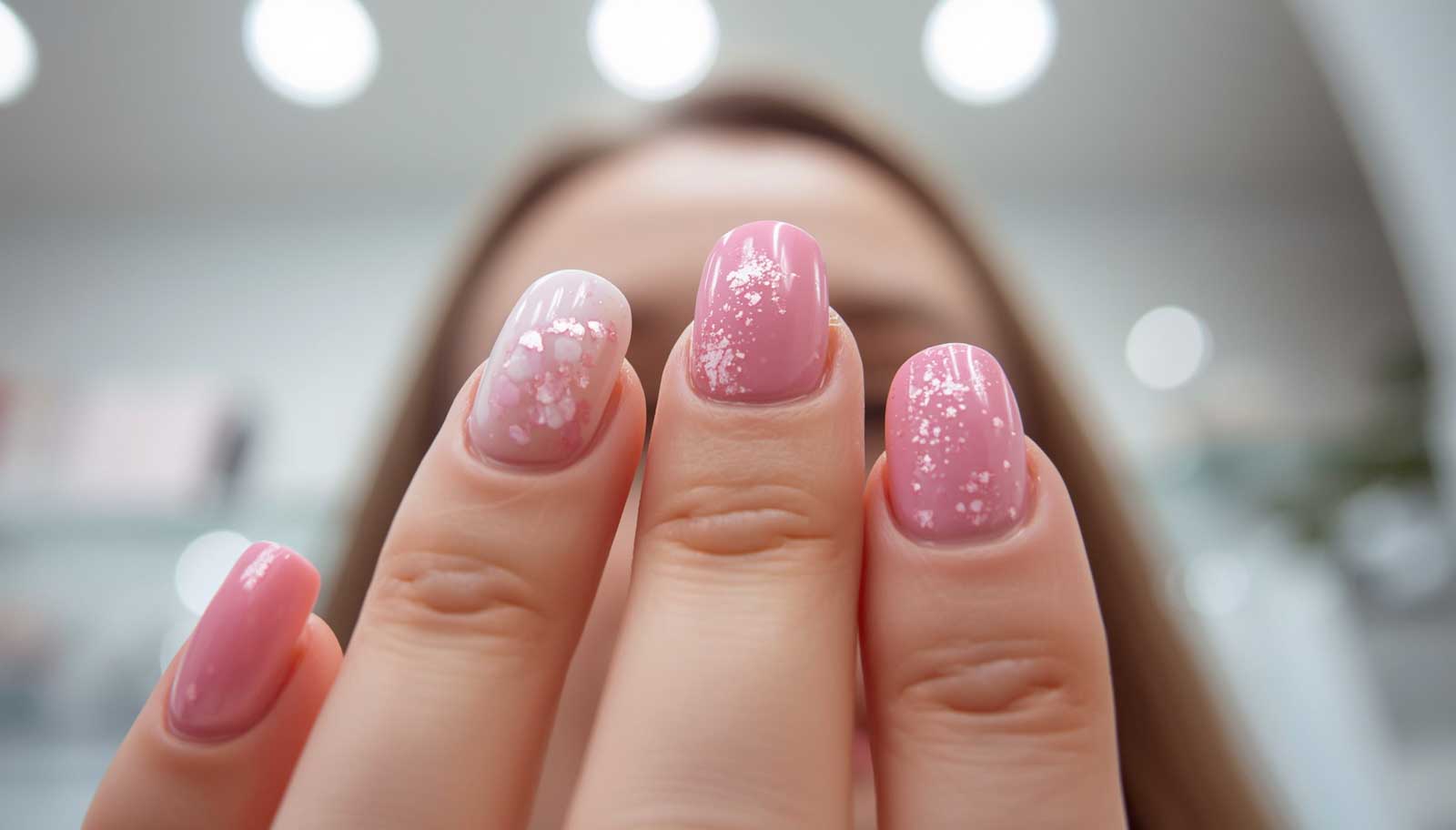
Swatches show what a nail polish actually looks like when applied.
Unlike bottle photos, swatches reveal:
Opacity
Undertones
Finish
Shine level
Glitter distribution
Real-world appearance
Many shoppers now look at swatches before buying because they offer a much clearer picture of the final result.
A polish bottle may attract attention, but the swatch tells the real story.
Can You Predict How a Polish Will Look?
With practice, yes.
Over time, you begin recognizing clues that indicate how a polish may perform.
You can often estimate:
Whether a shade is sheer or opaque
Whether it contains warm or cool undertones
How much shimmer it contains
Whether multiple coats will be necessary
However, even experienced nail enthusiasts are occasionally surprised by how a polish transforms after application.
That unpredictability is part of the fun.
Final Thoughts
Nail polish often looks different on your nails than it does in the bottle because you're viewing it under completely different conditions. Factors such as polish thickness, lighting, natural nail color, skin tone, undertones, opacity, and application technique all influence the final appearance.
Understanding these differences can help you shop more confidently and set realistic expectations before your next manicure.
The next time a polish looks slightly different than you expected, remember that the bottle is only part of the story. The true beauty of a nail polish usually reveals itself after it has been applied, layered, and viewed in real-world lighting.
In many cases, the color on your nails ends up looking even better than the one that first caught your eye in the bottle.

Comments (0)
No comments yet. Be the first to share your thoughts!
Leave a Comment
You must be logged in to post a comment.