The Truth About Nail Strengtheners: Do They Actually Work?

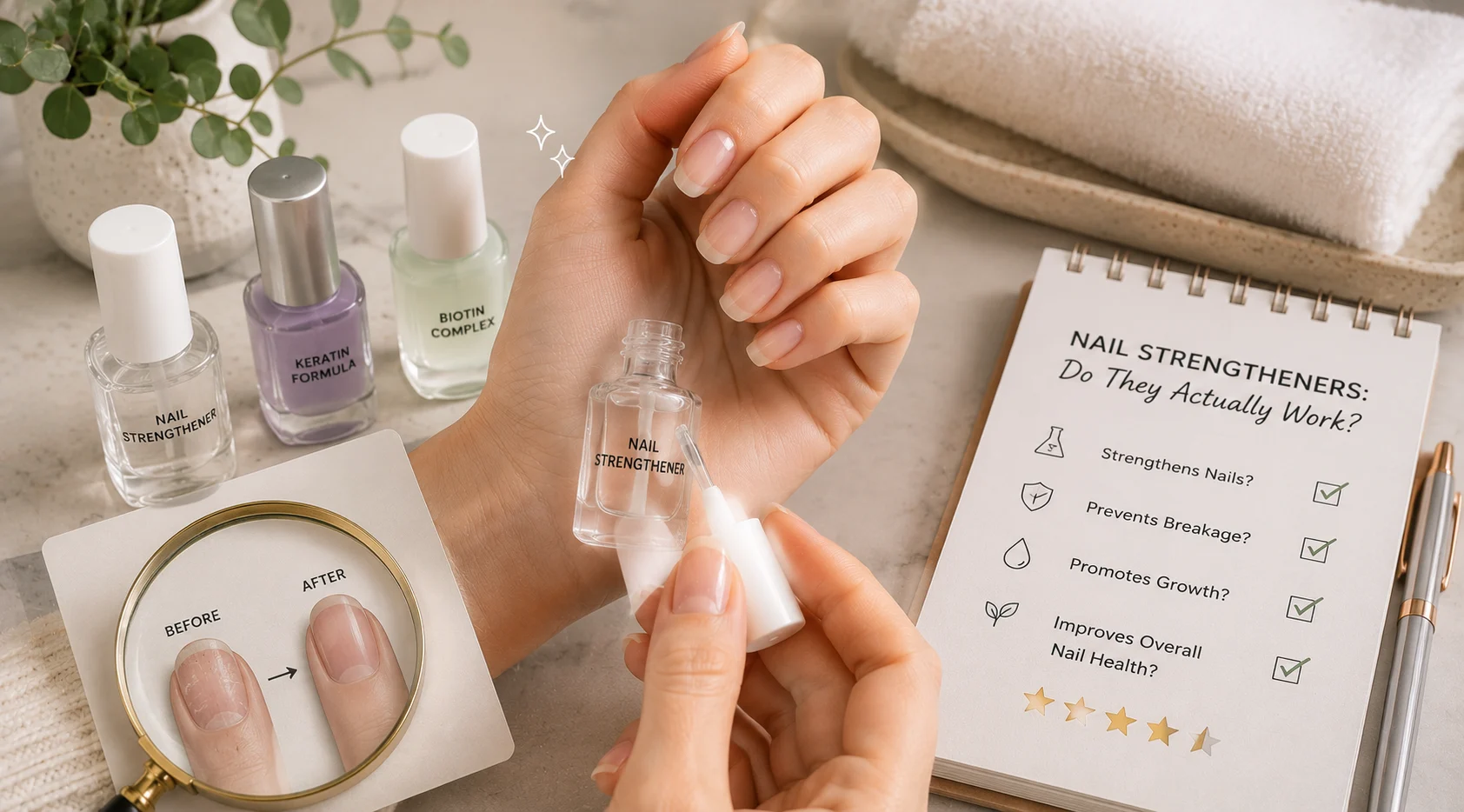
Weak, peeling, and brittle nails can be incredibly frustrating. That is why nail strengtheners have become one of the most popular nail care products on the market. Walk through any beauty aisle, and you will see dozens of bottles promising harder, longer, healthier nails in just days or weeks.
But do nail strengtheners actually work, or are they just another beauty product with exaggerated claims?
The truth is a little more complicated than most advertisements suggest. Some nail strengtheners can genuinely help improve weak nails, while others may actually make nails worse when used incorrectly. Understanding how these products work is the key to choosing the right one for your nails.


What Are Nail Strengtheners?
Nail strengtheners are treatments designed to improve the condition of weak or damaged nails. They are usually applied like nail polish and may come in clear, tinted, or treatment formulas.
Different products target different problems. Some focus on hardening soft nails, while others aim to hydrate dry nails or repair peeling layers.
Most nail strengtheners contain ingredients intended to reinforce the nail surface temporarily while protecting it from further damage.
Why Nails Become Weak in the First Place
Before expecting any product to fix weak nails, it is important to understand what may be causing the problem.
Nails can become weak for many reasons, including:
- Frequent hand washing
- Excessive acetone exposure
- Gel or acrylic damage
- Harsh cleaning chemicals
- Dehydration
- Aging
- Nutritional deficiencies
- Nail biting
- Over-buffing
Sometimes the nail problem is not about weakness at all. Dry nails, peeling nails, and flexible nails may each require different types of care.
Using the wrong treatment for your specific nail issue can make things worse instead of better.
How Nail Strengtheners Actually Work
Most nail strengtheners work by coating the nail with protective ingredients that temporarily reinforce the nail plate.
Some formulas create a harder outer layer to reduce bending and splitting. Others contain moisturizing ingredients that help flexible or peeling nails stay hydrated and less fragile.
Certain nail treatments also include proteins, keratin, calcium, or fibers designed to support the appearance of stronger nails.
However, nail strengtheners do not permanently change your natural nail structure. Nails are made mostly of keratin, and damaged nail tissue cannot fully repair itself once it grows out. These products mainly help protect new growth and reduce ongoing damage.
The Difference Between Hardening and Hydrating Treatments
One major mistake people make is assuming all nail strengtheners work the same way.
Hardening Nail Treatments
Hardening formulas are designed for nails that bend, tear, or break easily. They create a tougher surface layer that makes the nails feel more rigid.
While these treatments can help temporarily, overusing them may backfire. Nails that become too hard can actually become brittle and snap more easily under pressure.
This is especially common with formaldehyde-based hardeners.
Hydrating Nail Treatments
Hydrating treatments focus on moisture instead of hardness. They are usually better for peeling, flaky, or dry nails.
These products often contain oils, vitamin E, jojoba oil, or moisturizing ingredients that improve flexibility.
Flexible nails are often healthier than extremely rigid nails because they can bend slightly without breaking.
Many nail professionals now recommend balanced hydration over excessive hardening.
Do Ingredients Like Keratin and Calcium Really Help?
Many nail products advertise ingredients such as keratin, calcium, collagen, or biotin.
Keratin can help temporarily reinforce the nail surface because nails are naturally made from keratin protein. Some people notice smoother or stronger-feeling nails after using keratin-based products consistently.
Calcium, however, is often misunderstood in nail care marketing. Calcium deficiency is not usually the main cause of weak nails, despite what many beauty myths claim.
Biotin supplements may help some individuals with brittle nails, but results vary from person to person. Nail growth is influenced by overall health, genetics, hydration, and nutrition.
No topical product can instantly transform severely damaged nails overnight.
Signs a Nail Strengthener May Be Helping
A good nail treatment may gradually improve:
- Nail peeling
- Minor splitting
- Surface roughness
- Flexibility
- Breakage frequency
- Overall nail appearance
The improvement is usually subtle and takes time. Since fingernails grow slowly, visible results often require several weeks of consistent care.
Healthy nails grow from the nail matrix beneath the skin, so protecting new nail growth is part of the process.
Signs Your Nail Strengthener May Be Hurting Your Nails
Not every product works well for every nail type.
Some hardening treatments can cause nails to become overly stiff, dry, or more prone to cracking. If your nails suddenly feel painfully rigid or begin snapping more frequently, the treatment may be too harsh.
Peeling, irritation, redness, or sensitivity around the nail area may also indicate that a product is not suitable for you.
Sometimes taking a break from all nail treatments and focusing only on hydration can improve nail health more effectively.
What Dermatologists and Nail Experts Often Recommend
Many dermatologists emphasize gentle nail care over relying entirely on strengthening products.
Experts commonly recommend:
- Limiting acetone exposure
- Wearing gloves while cleaning
- Moisturizing hands and cuticles daily
- Avoiding aggressive buffing
- Not peeling off gel polish
- Keeping nails trimmed
- Using nourishing oils regularly
Hydration is often considered one of the most important parts of nail care because dry nails are more likely to split and break.
A quality cuticle oil may sometimes provide better long-term results than overly harsh hardening products.
Can Nail Strengtheners Fix Gel or Acrylic Damage?
Nail strengtheners may help support nails recovering from gel or acrylic damage, but they are not miracle cures.
When nails are thinned from aggressive filing or improper product removal, the damaged portion must gradually grow out over time.
During this recovery period, gentle hydration and protection are usually more helpful than aggressive hardening treatments.
Using strengthening products too frequently on already damaged nails can sometimes increase brittleness.
Patience is important because nail recovery is a slow process.
How to Choose the Right Nail Strengthener
Choosing the best product depends on your specific nail concerns.
If your nails are soft and bend easily, a mild strengthening formula may help. If your nails are peeling and flaky, hydrating treatments are often the better choice.
People with sensitive skin may want fragrance-free or formaldehyde-free formulas.
Reading ingredient labels matters more than flashy marketing claims.
A balanced nail care routine is usually more effective than depending on one single product.
Final Thoughts
Nail strengtheners can help improve the appearance and durability of weak nails, but they are not magic solutions. Some products work well for certain nail types, while others may cause dryness or brittleness when overused.
The biggest secret to healthier nails is understanding what your nails actually need. Dry nails need moisture. Peeling nails need protection. Damaged nails need time to recover.
In many cases, gentle nail care habits combined with hydration, patience, and occasional strengthening treatments provide the best long-term results.
Healthy nails are usually the result of consistent care, not quick fixes. Choosing the right products and treating your nails gently will always matter more than chasing miracle claims on a bottle.