How to Grow Long, Strong Nails Naturally, Even If They Always Break

If your nails have ever peeled, split, or snapped the second they peek past your fingertips, you’re not alone. Plenty of people swear by salon treatments, hardening polishes, or pricey serums, only to find their nails right back to breaking a few weeks later. The truth is, there’s no overnight trick to growing out strong nails. But there is a reliable, natural approach that actually works, if you stick with it.
I’ve watched friends and readers try every TikTok hack and drugstore bottle promising “diamond-hard” results. What actually moves the needle isn’t a single product. It’s a combination of protecting what’s already there, feeding your body the right building blocks, and cutting out the habits you didn’t realize were weakening your nails in the first place. Here’s what works in real life.
Why Your Nails Keep Breaking (Even When You’re Trying)
Before you slather on another strengthening treatment, it helps to know what you’re fighting. Nails are made of keratin, the same protein found in your hair and skin. They grow from the matrix under your cuticle, and anything that disrupts that process shows up as weakness, ridges, or splitting weeks later.


Most chronic nail breakage comes down to a few everyday culprits:
- Water and chemicals. Washing dishes, showering, and using hand sanitizer pull moisture out of the nail plate, making it brittle. Harsh soaps and acetone-based removers strip natural oils.
- Using nails as tools. Prying open packages, peeling stickers, or typing with the tips instead of the pads creates micro-fractures that travel down the nail.
- Improper filing or buffing. Sawing back and forth with a coarse file creates weak points. Over-buffing thins the top layers you’re trying to protect.
- Nutritional gaps. Low protein, iron, zinc, or B vitamins can quietly slow growth and make nails prone to peeling.
- Health and hormones. Thyroid imbalances, perimenopause, certain medications, or even seasonal dryness can change how your nails behave.
If you’ve been dealing with weak nails for months, it’s rarely just one thing. The fix isn’t a miracle serum. It’s a routine that stops the damage while supporting steady, healthy growth.
The Natural Routine That Actually Works
Growing out nails isn’t about forcing them to grow faster. It’s about keeping them intact long enough to reach your desired length. Most people give up around the four-week mark because they don’t see dramatic changes. Nails grow roughly an eighth of an inch per month. If you protect them consistently, you’ll notice a real difference in about eight to twelve weeks.
Hydrate From the Outside In (Yes, Nails Get Thirsty)
Nails don’t have oil glands, so they rely on the surrounding skin and cuticles to stay supple. The moment they dry out, they become rigid and snap under pressure.
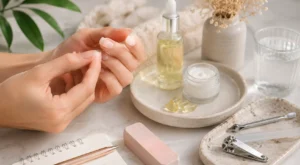
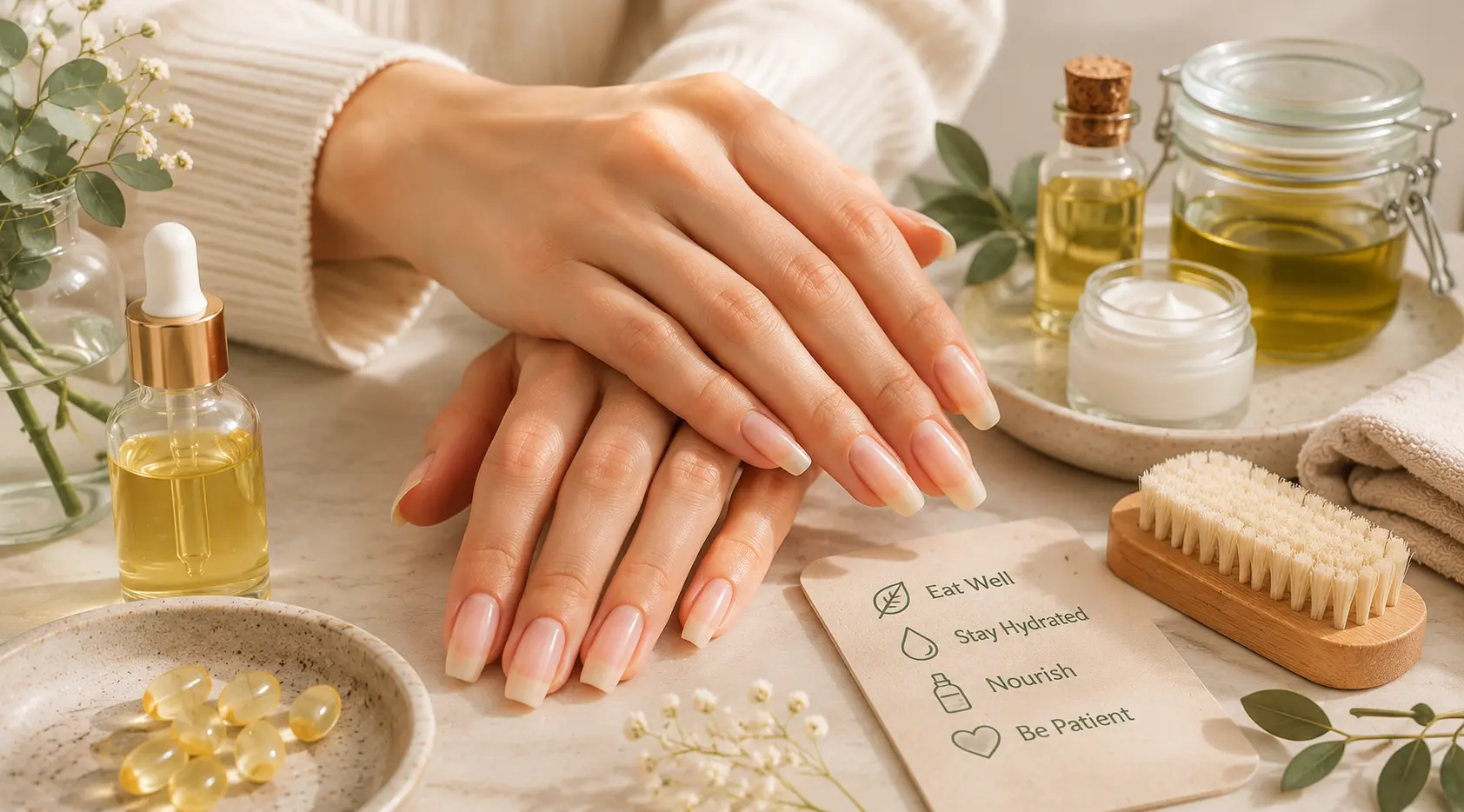
Keep a small bottle of jojoba oil or a cuticle serum by your sink. Massage it into your cuticles and nail beds at least once a day, ideally right after washing your hands when the skin is slightly damp. Jojoba mimics your skin’s natural sebum, so it absorbs instead of sitting on top. If you want something you already have in your kitchen, warm olive oil works in a pinch, though it’s heavier and can feel greasy.
Skip the thick, wax-based nail hardeners that claim to “fortify” your nails. They often contain formaldehyde or harsh resins that make nails temporarily stiff, which actually increases the chance of cracking when they flex.
Stop the Micro-Damage You’re Probably Causing
You don’t need to quit using your hands, but small habit shifts make a massive difference:
- Wear cotton-lined gloves when washing dishes, cleaning, or doing anything that soaks your hands for more than ten minutes.
- Switch to a gentle, acetone-free remover and soak pads instead of scrubbing.
- File in one direction with a fine-grit glass or crystal file. Glass files seal the keratin layers instead of tearing them.
- Keep nails slightly rounded or squoval rather than sharp square edges, which catch on everything and split.
- Moisturize immediately after hand sanitizer. The alcohol evaporates quickly and takes your nail’s moisture with it.
The Oil Soak That Changes Everything
If your nails are already peeling or feel paper-thin, try a weekly soak. Mix two tablespoons of warm jojoba or sweet almond oil with a few drops of vitamin E oil. Soak your fingertips for ten minutes, then gently push back softened cuticles with a wooden stick (never metal). Follow with a rich hand cream and, if you can, slip on thin cotton gloves for an hour or overnight. Do this consistently for a month, and you’ll feel a noticeable difference in flexibility and resilience.
Foods & Supplements That Support Nail Growth
Topical care only gets you so far. Your nails are built from the inside, and what you eat shows up in how they grow.
Prioritize complete proteins. Chicken, eggs, beans, tofu, Greek yogurt, and fish give your body the amino acids it needs to produce keratin. Don’t overlook iron and zinc. Lean red meat, lentils, pumpkin seeds, and spinach support cell turnover and oxygen delivery to the nail matrix.
Omega-3 fatty acids from salmon, walnuts, or flaxseed help maintain the lipid barrier around the nail, keeping moisture locked in.
As for supplements, biotin gets all the hype, and it does help some people with brittle nails. But it’s not a magic bullet. If you already eat a varied diet, you’re probably getting enough. A standard 2,500 mcg daily dose is safe for most adults, but megadoses won’t speed up growth and can interfere with lab tests. If you suspect a deficiency, it’s worth asking your doctor for a basic blood panel before spending money on high-dose supplements.
Collagen powder, marine-derived or bovine, has shown modest benefits in clinical studies for nail thickness and breakage. It’s not essential, but if you’re already drinking protein shakes or smoothies, tossing in a scoop is an easy, low-risk addition.
When “Natural” Isn’t Enough (And What to Do Next)
Sometimes, despite doing everything right, nails just won’t cooperate. If you’ve been consistent with care and nutrition for three months and still see severe splitting, discoloration, pain, or nails lifting from the bed, it’s time to see a dermatologist or primary care provider. Conditions like psoriasis, fungal infections, thyroid disorders, or eczema around the nail folds require targeted treatment. No amount of oil or filing will fix an underlying medical issue.
Also, if you’re regularly getting gel or acrylic fills, give your nails a full break. Even “breathable” or soak-off gels require filing that thins the natural plate over time. Let them grow out completely, keep them trimmed short during the recovery phase, and rebuild strength before going back to enhancements.
The Realistic Timeline for Stronger Nails
Natural nail growth doesn’t happen overnight, and anyone promising results in a week is selling something. Expect to see less peeling within three to four weeks. Visible length and noticeable strength usually take eight to twelve weeks of consistent care. If you’re patient and stick to the routine, you’ll reach a point where your nails actually survive daily life without splitting.
Growing long, strong nails naturally isn’t about finding the perfect product. It’s about treating your nails like what they are: a living, growing part of your body that needs protection, hydration, and time. Ditch the tools, wear the gloves, oil the cuticles, feed your body well, and give it a few months. The results aren’t flashy, but they last.