Polygel Nails at Home: Is It Really Worth the Hype?

Polygel nails have exploded in popularity over the past few years, especially among beauty enthusiasts looking for a salon-quality manicure at home. Social media platforms are filled with videos showing flawless extensions, impressive nail transformations, and claims that Polygel is easier to use than acrylics and stronger than regular gel polish.
But is Polygel really the game-changing nail product people claim it is? Or is it just another beauty trend that looks easier online than it actually is?
The truth is that Polygel offers several advantages over traditional nail enhancements, but it is not completely beginner-proof. Like any nail product, it comes with its own learning curve, costs, benefits, and drawbacks.



If you are considering trying Polygel nails at home, understanding how the system works can help you decide whether it is worth the investment.
What Are Polygel Nails?
Polygel is a hybrid nail enhancement product that combines some of the best qualities of acrylic and gel nail systems.
Unlike traditional acrylics, Polygel does not require mixing liquid monomer with powder. Unlike regular gel polish, it is thick enough to create extensions and add significant strength to the natural nail.
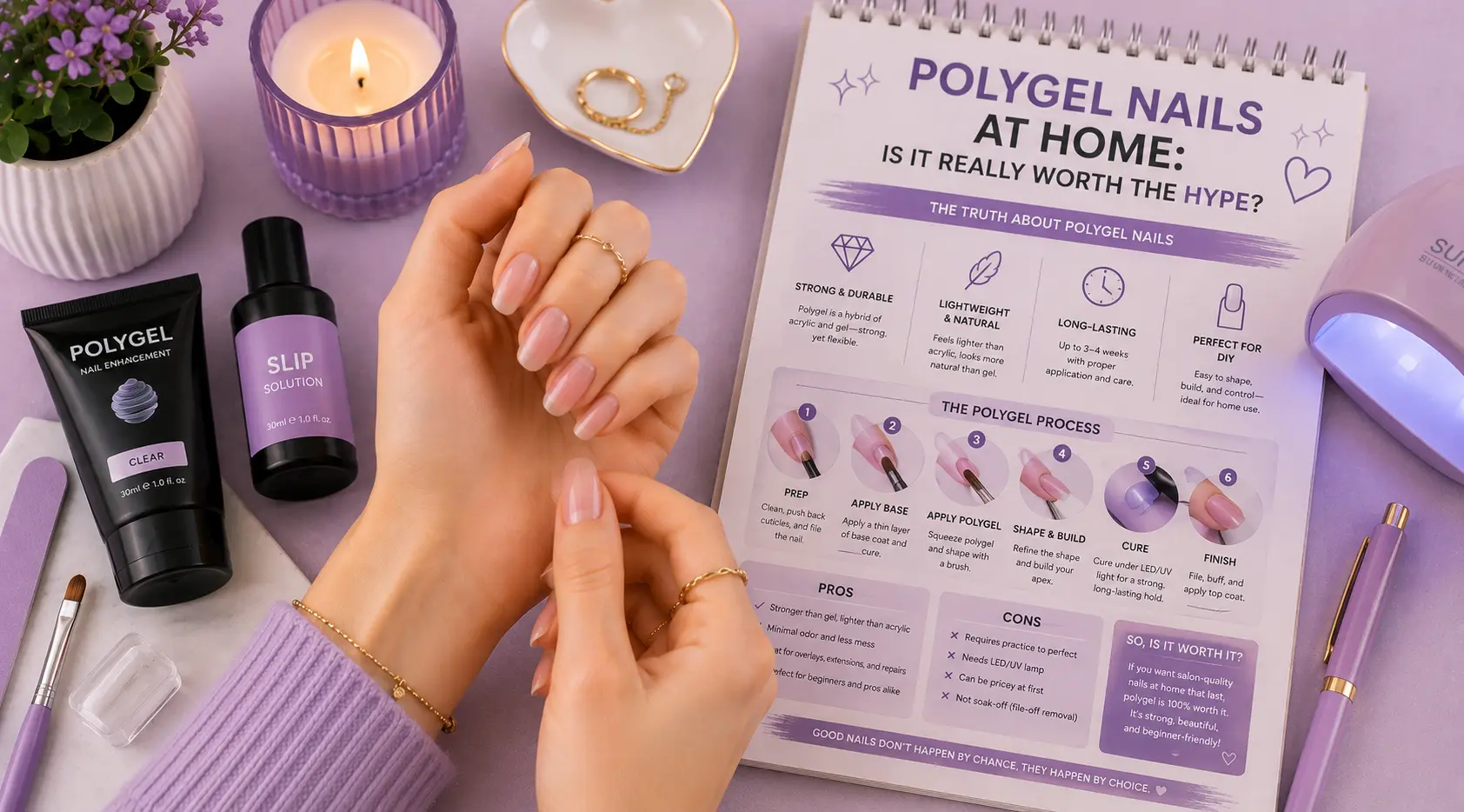
The product comes in a tube and has a putty-like consistency. Nail users shape the product onto the nail using a brush and a special slip solution before curing it under a UV or LED lamp.
Once cured, Polygel becomes hard and durable while remaining lighter than many acrylic systems.
This unique combination of flexibility and strength is one of the main reasons for its growing popularity.
Why Polygel Became So Popular
One reason Polygel gained attention so quickly is that it promises professional-looking results without many of the challenges associated with acrylic nails.
Traditional acrylic systems can be intimidating for beginners because they require proper liquid-to-powder ratios and quick application before the product hardens.
Polygel, on the other hand, does not begin curing until it is placed under a lamp. This gives users more time to shape and perfect the nail.
Many people also appreciate the reduced odor compared to acrylic systems, which often produce strong chemical smells.
For at-home nail enthusiasts, these benefits make Polygel seem much more approachable.
How Polygel Nails Are Applied
The process begins with proper nail preparation.
Natural nails are cleaned, lightly buffed, and shaped before applying a base coat. Once cured, a small amount of Polygel is placed either directly onto the nail or inside a dual form.
Using a brush dipped in slip solution, the product is shaped and smoothed into place.
After achieving the desired shape, the nail is cured under a UV or LED lamp. Once hardened, the nail is filed, refined, and finished with color or top coat.
While the process sounds straightforward, achieving smooth and natural-looking results often takes practice.
Many beginners find that their first few applications are thicker and less polished than expected.
The Biggest Advantages of Polygel Nails
One of Polygel’s strongest selling points is its balance between strength and flexibility.
Unlike some acrylic nails that can feel heavy, Polygel tends to feel lighter on the nail. Many users find it more comfortable for everyday wear.
Another advantage is the extended working time. Because the product remains moldable until cured, users can take their time correcting mistakes.
Polygel is also generally less messy than traditional acrylic systems. There is no need to worry about mixing products or creating strong fumes.
Many users appreciate the durability as well. Properly applied Polygel nails can often last several weeks before requiring maintenance.
The Drawbacks Most Beginners Do Not Expect
Despite the hype, Polygel is not perfect.
One of the biggest misconceptions is that it is effortless to apply. While easier than acrylics for many people, it still requires skill, patience, and practice.
Achieving smooth cuticle areas and natural-looking nail shapes can be surprisingly difficult at first.
Filing is another challenge. Beginners often underestimate how much shaping and refining is needed after curing.
The initial investment can also add up. A complete Polygel setup usually includes:
- Polygel tubes
- UV or LED lamp
- Base coat
- Top coat
- Slip solution
- Nail forms or dual forms
- Brushes
- Nail files
While still cheaper than repeated salon visits, the upfront cost may be higher than some people expect.
Are Polygel Nails Better Than Acrylics?
The answer depends on your priorities.
People who value flexibility, lighter nails, and easier application often prefer Polygel. The product generally feels more forgiving during application because it does not harden until cured.
Acrylics, however, are still known for exceptional durability and strength. Many professional nail technicians continue to prefer acrylic systems for certain types of long extensions.
For most beginners, Polygel is often easier to learn than acrylics, though neither system is completely beginner-friendly.
Are Polygel Nails Better Than Gel Polish?
Polygel and gel polish serve different purposes.
Regular gel polish is primarily designed for color and shine. It adds only a small amount of strength and cannot create significant nail extensions.
Polygel, however, functions as a structural enhancement. It can extend nail length, reinforce weak nails, and create custom shapes.
If your goal is simply long-lasting color, gel polish may be sufficient. If you want stronger nails or extensions, Polygel offers capabilities that regular gel polish cannot provide.
How Long Do Polygel Nails Last?
When applied correctly, Polygel nails can often last between two and four weeks before needing maintenance.
The exact lifespan depends on several factors, including nail growth, application quality, lifestyle, and daily activities.
People who frequently use their hands for work may experience lifting or wear more quickly.
Regular maintenance helps keep the nails looking fresh and prevents small issues from becoming larger problems.
Can Polygel Damage Natural Nails?
Polygel itself is not usually the primary cause of nail damage.
Most nail damage occurs during improper application or removal.
Aggressive filing, excessive buffing, and peeling products off the nail can remove layers of the natural nail plate. This is similar to the problems often associated with gel polish and acrylics.
Proper removal involves filing down the product carefully and following recommended removal techniques rather than forcefully pulling it off.
When used responsibly, Polygel can be worn without causing significant damage to healthy natural nails.
Who Should Try Polygel Nails?
Polygel may be a good option for people who:
- Want salon-style nails at home
- Enjoy learning nail techniques
- Prefer stronger nails and extensions
- Dislike strong acrylic odors
- Want more working time during application
However, individuals looking for a quick, low-maintenance manicure may find regular nail polish or gel polish more practical.
Success with Polygel often depends on patience and willingness to practice.
Is Polygel Worth the Hype?
For many nail enthusiasts, the answer is yes.
Polygel successfully combines many of the benefits of acrylic and gel systems while reducing some of their biggest frustrations. The product offers impressive durability, flexibility, and customization options that appeal to both beginners and experienced nail lovers.
However, it is not a miracle product. Social media videos often make application look easier than it actually is. Most users need time to develop proper shaping, filing, and application skills.
If you enjoy DIY beauty projects and are willing to practice, Polygel can be a rewarding investment.
Final Thoughts
Polygel nails have earned their popularity for good reason. They offer a versatile, durable, and relatively beginner-friendly alternative to traditional nail enhancements.
While there is a learning curve involved, many people find that the ability to create strong, beautiful nails at home makes the effort worthwhile.
The key is approaching Polygel with realistic expectations. It may not deliver salon-perfect results on your first attempt, but with patience and practice, it can become one of the most useful tools in your at-home nail care routine.
For those looking to achieve long-lasting, professional-looking nails without constant salon visits, Polygel is a trend that largely lives up to its reputation.